Looking Beyond the Trends: Q+A with Rhea Vaflor, IIDA, LEED AP BD+C

Associate Principal and Director of Lifestyle + Trendcasting, Rhea Vaflor, IIDA, LEED AP BD+C, helps clients see beyond what’s trending to understand what people truly need from the built environment. Having started her career at Hickok Cole as an intern before returning to help build the firm’s Lifestyle interiors practice from the ground up, Rhea brings a unique perspective shaped by curiosity, creativity, and a deep understanding of human experience. In this Q+A, she reflects on her journey, the evolving role of interior design, and what’s next for the industry.
Q: Why Hickok Cole?
A: I started my career here as an intern, and what stood out immediately was the culture. People were incredibly generous with their knowledge, and even as a young designer, I was trusted with real responsibility. I learn by doing, so that environment was a perfect fit.
During my first stint, I worked on everything from affordable housing to luxury residential projects and workplace design. That range taught me to think deeply about who you’re designing for, rather than seeing design through a single lens. When the opportunity came up to help launch the residential interiors practice, I couldn’t pass it up. Building something from the ground up was exciting, and it felt especially meaningful because it was in a sector I genuinely loved. Looking back, I’ve always felt empowered here. I’ve never felt like just a number. That’s rare, and it’s something I try to pay forward in how I lead today.
Q: How do you strike a balance between planning for the future and remaining present?
A: People are often surprised to learn that trendcasting involves a lot of studying the past. I spend a considerable amount of time reading history because understanding where we’ve been helps us understand where we’re going. In design, very few ideas are completely new. What persists are the themes and experiences that continue to resonate across cultures and generations. I try to look for those enduring threads of humanity and then interpret them through a contemporary lens.
Personally, I find balance in nature. When I’m outside, away from screens and distractions, everything tends to become clearer. It’s often where I make sense of the trends and behaviors I’m observing and reconnect with the human perspective that sits at the center of all good design.
WHAT’S NEXT
Q: What trends and new research should clients be aware of?
A: The biggest trend isn’t really a trend at all. It’s understanding people more deeply. Too often, amenities get added because they’re popular elsewhere. The better question is whether they genuinely improve life for the people who will use them. We’re seeing a growing interest in self-improvement, but that means different things to different communities. For some, it’s fitness. For others, it’s creativity, learning, or spaces that support personal growth. That’s why we’re seeing renewed interest in things like libraries, maker spaces, and opportunities for hands-on experiences.
We’re also seeing a reaction to digital overload. People want to make things, learn skills, and connect with others in more tangible ways. The most successful environments will be the ones that recognize people as more than consumers and create spaces that reflect the unique culture of a place and community.
Q: Where is the field of interior design headed?
A: I think interior design is shifting from being primarily about style to being about experience. We know far more today about how environments affect our minds and bodies, and that’s changing the way we design. The future is less about what a space looks like and more about what it feels like. Light, sound, texture, air quality, scent, and connection to nature all play a role in shaping human experience. As designers, we have an opportunity to create spaces that actively support wellbeing.
I also think we’ll see greater overlap between interior design, landscape architecture, and even biology. As our understanding of natural systems grows, those disciplines will become increasingly interconnected. The designers of the future will need a much broader understanding of how people and environments work together.
Q: What should someone hiring Hickok Cole know?
A: We’re not interested in creating a style for the sake of style. We design for stories. Every project is an opportunity to create a distinct world, whether that’s a residential community, a workplace, a hotel, or a retail environment. We spend a lot of time understanding what makes that place unique and how we can express that through design.
The result is something that’s not only beautiful, but meaningful. Our goal is always to create places with depth, authenticity, and soul, and to do that alongside our clients, not just for them.
LOOKING BACK
Q: What is your favorite Hickok Cole memory?
A: The Hickok Cole 500! Everyone in the firm, from the most junior staff to the most senior, was given 45 minutes to design and build a small racecar larger than a matchbox from random building material scraps and craft supplies. Back in our old office in Georgetown, we measured out 500 feet from the top of our hill, and everyone raced them down in different heats. It was so fun, and we made a banner like the Indy 500. Some people got really into it and even wore mullet wigs. What was meant to be an hour-long activity ended up going until 8 PM. People came out from the surrounding businesses and stood on the sidewalk to cheer us on! I think back to this, and it’s incredibly indicative of Hickok Cole’s culture.
Q: What are your favorite projects you’ve been involved in, and why?
A: The Batley, because we were able to incorporate so many found objects into the design. The building used to be an old food warehouse, and when we first walked the site, we identified a vintage neon sign to be salvaged. It was repurposed into an outdoor table on the roof and still lights up. We also turned old filing cabinets into art. I love that we used elements from what stood before.

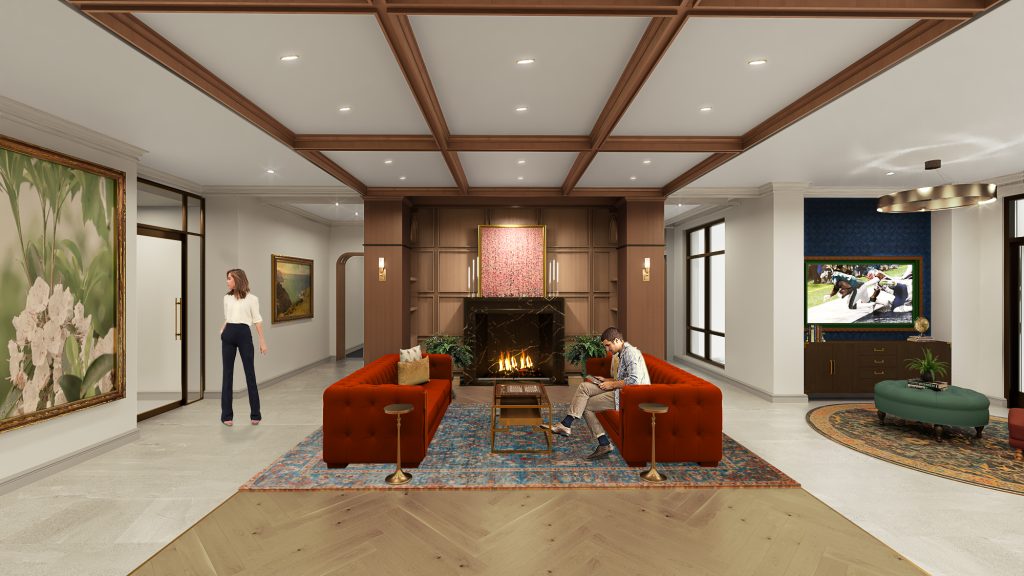
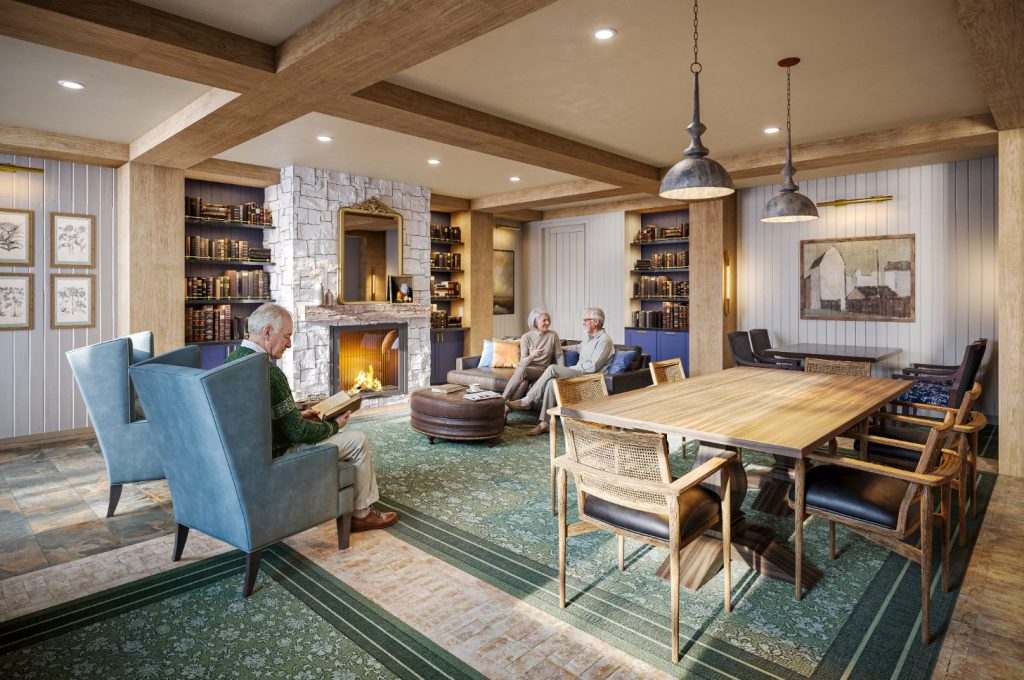
This year, we are delivering two residential projects outside of Philadelphia, PA: The Craig and Fox Hollow Active Adult. I grew up in the suburbs of Philadelphia, and I am a die-hard Philly sports fan. It’s been rewarding to draw inspiration from familiar elements that shaped how I view the world. We drew design inspiration from the aesthetic of surrounding Main Line towns for The Craig and the Shaker style of the Pennsylvania Dutch for Fox Hollow. I know that Philly can have a prickly reputation, but the people there love other people and gathering. I’ve always loved analyzing how people can come together and enjoy each other’s company.
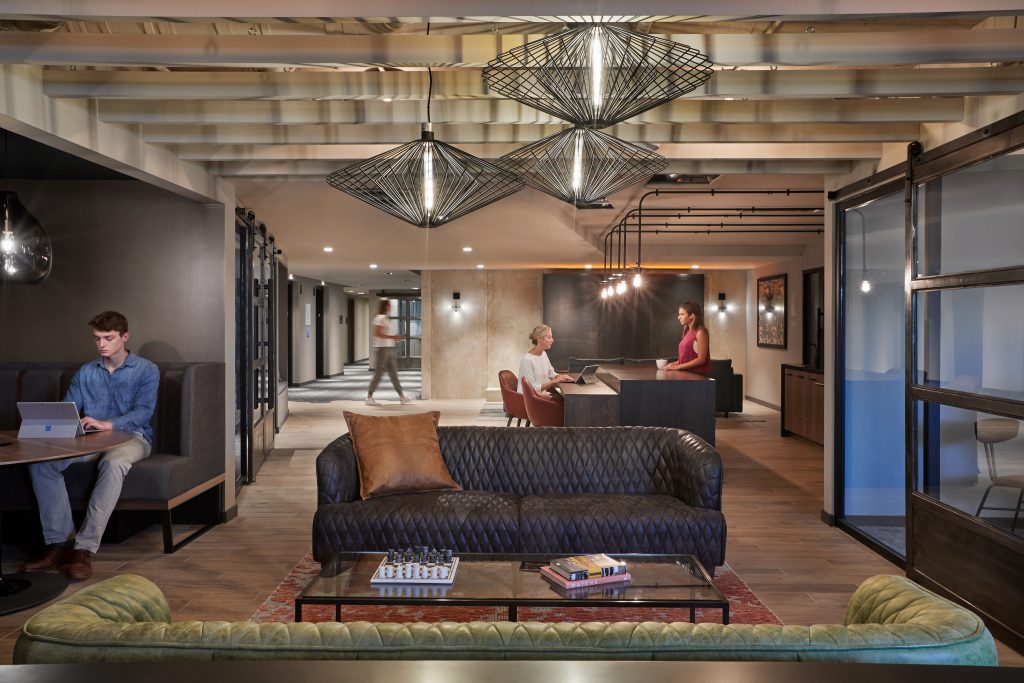
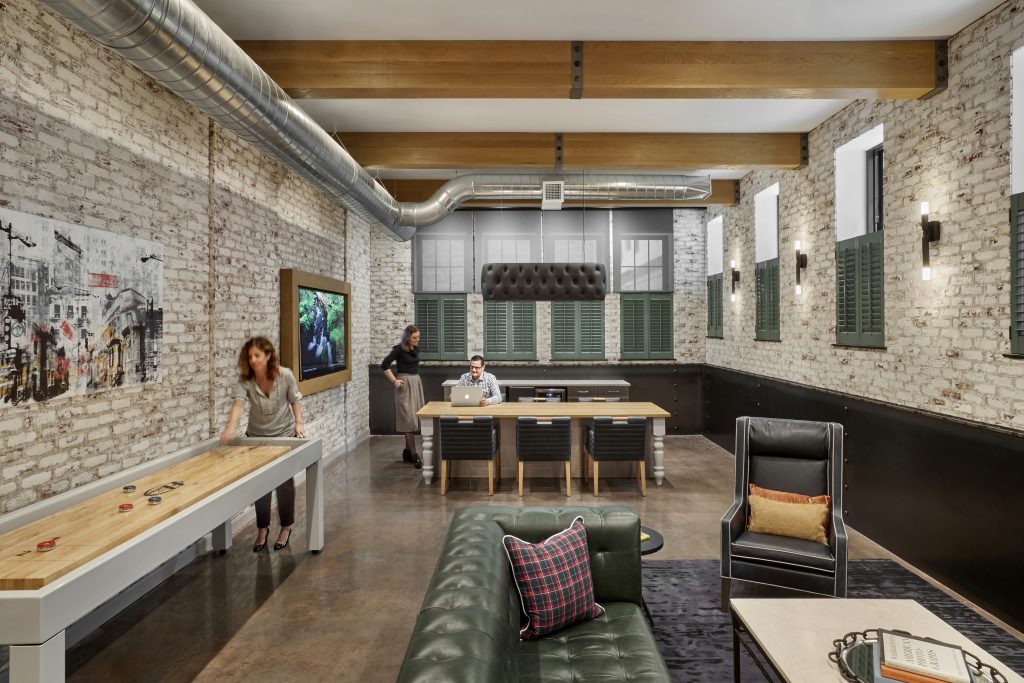
455 Eye Street NW also comes to mind. The existing building was repurposed; it was once a 19th-century blacksmith shop and later an auto repair shop. We were able to take materials from the site to reuse, such as warehouse fans and an old steel door that was used in the package room. We kept a lot of the exposed brick, and an artist hand-painted every single one to look whitewashed. We even went to the Library of Congress to procure historic, hand-drawn 19th-century maps of the area and created custom wallpaper for the fitness center. I love that we could save the history of the building and turn it into residential.

Q: What has being a leader taught you?
A: Humility. More than anything else, leadership has taught me that. The skills that help you succeed as a designer aren’t necessarily the same skills that help you lead people. Leadership requires listening, self-awareness, and a willingness to learn continuously. It means creating an environment where other people can do their best work.
I still don’t think of leadership as something you’ve mastered. For me, it’s an ongoing learning process. Every team, every project, and every challenge teaches you something new.
Q: What’s one way the field of design has changed over the course of your career?
A: One of the most significant shifts has been the growing recognition of how much our environments affect our wellbeing. Before the pandemic, conversations around mental health, mindfulness, and the experience of home weren’t nearly as prominent. Today, they’re central to many design conversations.
I’ve also seen the relationship between clients and designers become much more collaborative. Clients arrive with ideas, inspiration, and a deeper understanding of the role design plays in their lives. That’s led to a more dynamic and creative process where we’re developing solutions together rather than simply presenting options. Ultimately, the profession has become more interdisciplinary, more human-centered, and more focused on the impact spaces have on everyday life.