
Designing with Purpose: Q+A with Mike Johnson II, FIIDA, AIA, NOMA
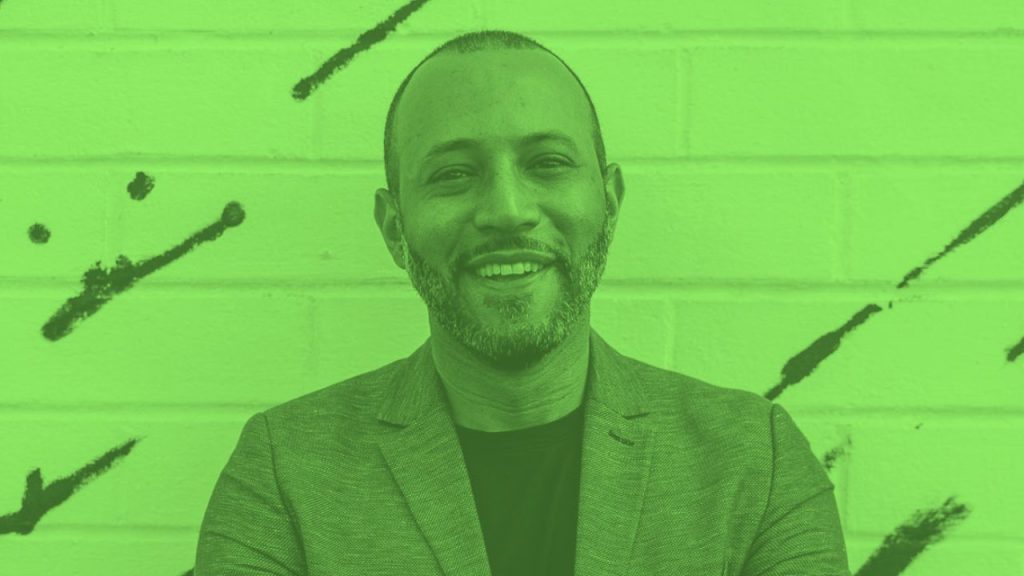
As Mike Johnson II, FIIDA, AIA, NOMA, Director of Interiors and Associate Principal, reflects on more than two decades in design, one thread runs throughout his career: creating spaces that connect people to purpose. A Washington, DC native, Mike shares how his path from architecture to interiors has been shaped by curiosity, community, and a commitment to meaningful design.
Q: Why Hickok Cole?
A: I was drawn to Hickok Cole because of the firm’s commitment to design excellence, but also because of its commitment to people and community. As someone who grew up in Washington, DC, that mattered to me. Hickok Cole has a long history here of doing thoughtful, forward-thinking work, and that really aligned with the way I’ve always approached design. Hickok Cole feels deeply connected to the city. From the office’s creative energy to the local artists and character of the NoMa neighborhood, it feels rooted here. That means a lot to me.
For me, “work that matters” means work rooted in concept, culture, collaboration, curiosity, and knowledge. I’ve never wanted to design spaces that are simply beautiful. I’ve always wanted to create spaces that mean something to people when they walk through the door.
What also stood out for me was the opportunity to mentor young designers. As Director of Interiors, I can help cultivate that creative experience throughout the studio, encouraging people to think in ways they might not have before. That felt like a meaningful next step for me.
WHAT’S NEXT
Q: Where do you see the future of workplace interiors going, and what do you hope for?
A: I think the future of workplace interiors is deeply tied to equity, inclusivity, and human experience. Younger generations, especially those whose college years were shaped by quarantining during the COVID-19 pandemic, are looking for something more than Microsoft Teams or Zoom. They want healthy, meaningful human interaction. They want to be around people who are like them and different from them.
The workplace can play an important role in that. It can be a place where people connect, grow, learn from one another, and become better leaders. What I hope for is that we continue creating spaces that help people feel like they belong and spaces that support both individual growth and community.
Q: What trends should clients be aware of?
A: Purpose-driven design is becoming increasingly important. Clients want spaces that reflect their values, culture, and mission. If you’re making a long-term investment in a workplace, it should feel intentional. It should be a place people want to spend time in, bring clients to, and connect with.
A good test is this: if you took the name and logo off the wall, would you still know whose space it is? That kind of identity isn’t just about finishes. It’s about lighting, mood, sound, people, and the overall experience of being there.
AI is becoming part of the conversation too, but I see it as a tool, not the driver. If it becomes the driver, you risk creating something generic. What matters most is using design to create spaces that feel authentic and purposeful.
Q: What should someone hiring Hickok Cole know?
A: At Hickok Cole, every project starts with listening. We take the time to understand what makes a client unique, like their culture, values, mission, and aspirations. That’s important because our work is never one-size-fits-all. Our goal is not simply to create beautiful spaces. It’s to create meaningful environments that feel authentic to the people who use them.
What makes us distinctive is the way our disciplines work together from the beginning: architecture, interiors, creative branding strategy, and wayfinding. That integrated process helps us create places that feel immersive, thoughtful, and deeply connected to purpose.
LOOKING BACK
Q: What is your favorite project you’ve been involved in and why?
A: One of the most meaningful projects I’ve worked on is The DC LGBTQ+ Community Center. It’s one of the most heartfelt and thoughtful projects of my career. From the beginning, the conversations were deeply emotional. Hearing people talk about the need for safety, dignity, and belonging was powerful. It made you stop and ask, “How is this still something people have to worry about?” That shaped how we approached the work. We wanted to create a place that felt secure in a world that can often feel uncertain.
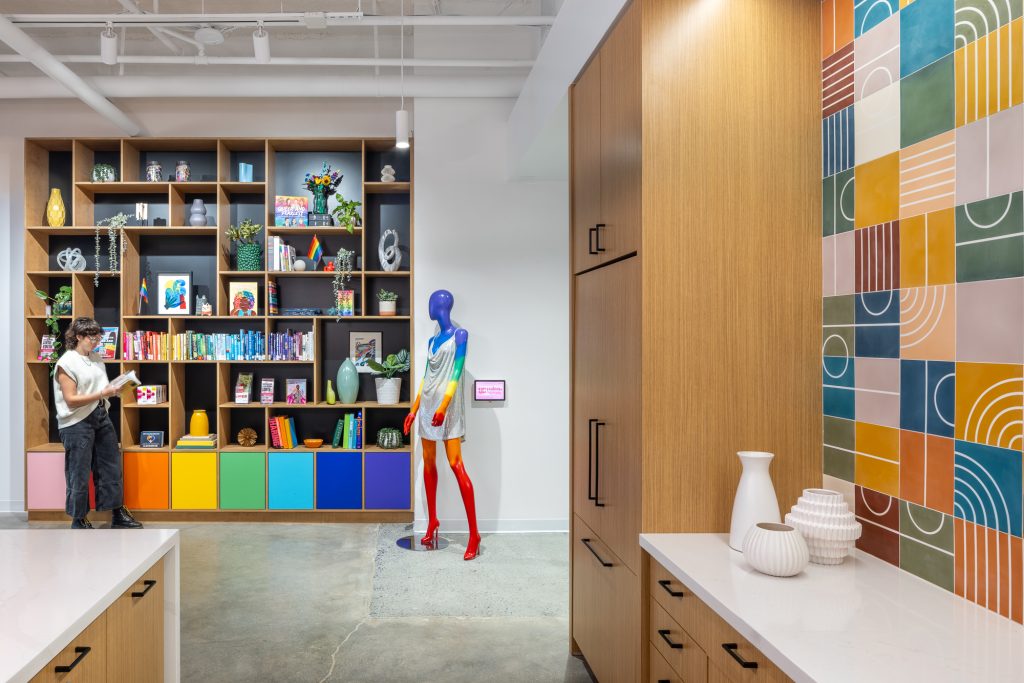
What made the project especially meaningful was seeing how the community came together around it. It was a pro-bono effort, and we were working with a very limited budget. There were moments when it almost didn’t happen. Our team helped build support through 3D views and panoramic renderings, showed up at fundraising events, and worked with furniture manufacturers, carpet reps, and tile partners to help make the project possible.
To see that collective effort result in a space the community could truly make its own was incredibly moving. Even during the programming phase, it was hard not to get emotional. That project will stay with me.
Q: What was your path to this position?
A: I started my career in architecture, and I’ve been in the industry since 2002. My path into interiors happened almost by accident. During my fourth year at Howard University, 9/11 happened, and it changed the market. A lot of base-building work slowed down, while interiors became more active. Buildings take time. Interiors moved faster, and I was drawn to that pace.
What I loved was being able to see ideas come to life more quickly. You could learn from one project and apply that thinking to the next. In a year, you could work on multiple projects and create environments that directly shaped how people experienced a place every day.
Over the course of my career, I’ve continued working in both architecture and interior design. I’m licensed in both disciplines, and that has been valuable. Understanding how a building works strengthens the way I think about interiors, and interior design thinking can strengthen architecture as well.
Q: How did you get into this field?
A: Before architecture, I was obsessed with comic books. I spent a lot of time reading them, studying them, and creating my own stories. What fascinated me was the idea of world-building and how people could create entire environments, characters, and experiences from imagination.
My mother saw that creative energy and wanted to help me find a way to channel it into a career. In high school, I participated in a DC youth program that partnered with Howard University’s architecture and design program. That was really my introduction to the field.
I took classes with professors, worked with charcoal and watercolor, and started learning about space, composition, and layers. Architecture felt connected to the same creative instincts that drew me to comic books—it was another way of building worlds. That experience is what led me to apply to Howard.
Q: What accomplishment are you most proud of and why?
A: One accomplishment I’m especially proud of is being selected as the next President of the International Interior Design Association’s (IIDA) International Board of Directors. In 2027, I will become the first Black male President on the board. It’s an honor, but it also carries a real sense of responsibility. I never thought I would be in this position when I was younger. To now have the opportunity to help support emerging designers and advance the conversation around belonging, representation, and leadership in this industry means a lot to me.
A big part of why I applied is that I wanted to create. I believe I can continue the thoughtfulness and engagement that IIDA has built as an association, while also helping create space for future leaders. I want someone else who looks like me to be able to see themselves there.
That commitment to leadership development has been important to me throughout my career. During my time with the IIDA Mid-Atlantic Chapter, I helped create PLAID (Propelling Leadership and Advocacy in Interior Design) as an emerging leadership program for early-career professionals. The goal was to help people intentionally build leadership skills rather than only learn as they go. At the time, it was the first program of its kind for the chapter, and I’m proud of the opportunities it created for the next generation.
Q: What’s one way the field of interior design has changed over the course of your career?
A: Interior design today is much more centered on human experience. Earlier in my career, the conversation was often about solving spatial problems. That still matters, but now there is much more attention to equity, inclusion, belonging, and how people actually feel in a space. Design is increasingly about shaping environments that support connection.