
Making the gym a destination
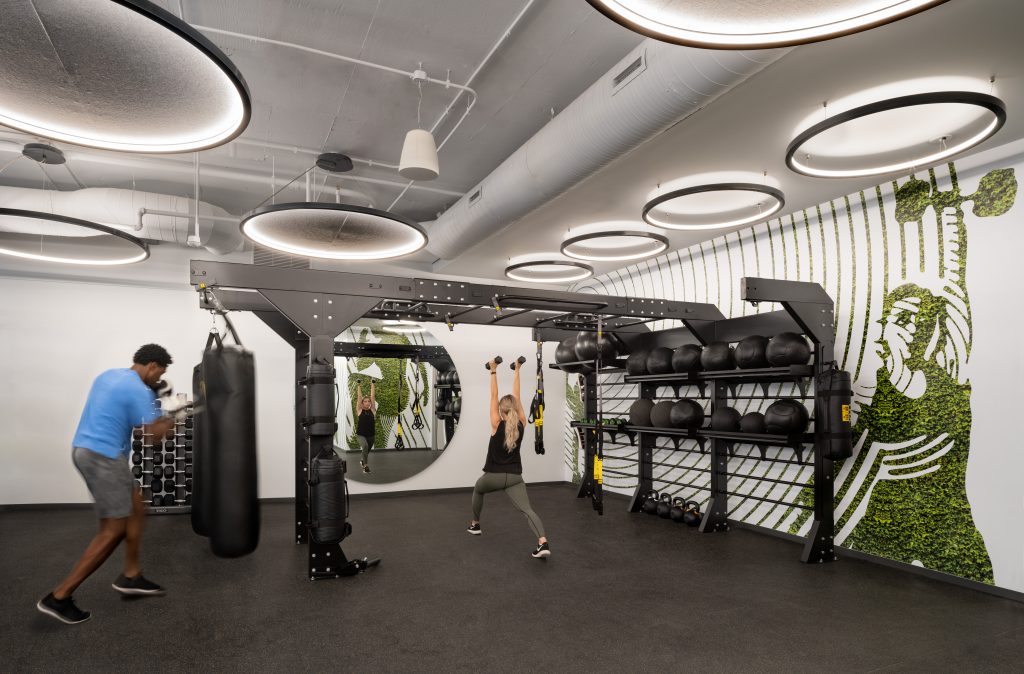
Fitness centers used to be an afterthought. A blank room lined with treadmills, a few machines, and mirrored walls. Today, they are often the most-used amenity in multifamily communities, office buildings, and hotels. Tenants expect a certain level of wellness offerings that are on par with boutique studios. In repositioning efforts, fitness centers can be the defining differentiator.
In conversations with two of our Lifestyle interior designers, Associate Principal and Director of Lifestyle + Trendcasting, Rhea Vaflor, IIDA, LEED AP ID+C, and Associate, Maureen McLaine, NCIDQ, WELL AP, both former college athletes, one thing became clear: designing a great fitness space isn’t about adding more equipment. It’s about understanding how people move and recover.
More Space, Less Equipment
Instead of packing in rows of various bulky cardio machines, today’s most effective spaces prioritize open areas for lunges, stretching, lifting, and functional fitness. There is room to move freely. Cardio, strength equipment, free weights, and cables still matter. But functional fitness, movements like push, pull, lift, and hang, will stay around forever, outlasting trends and new fads. In a society where many of us sit at desks looking at screens for eight hours, five days per week, designing for full-body movement is essential. Ample square footage makes that possible. Over 2,000 SF provides enough room to move comfortably and accommodate users with different physical needs.
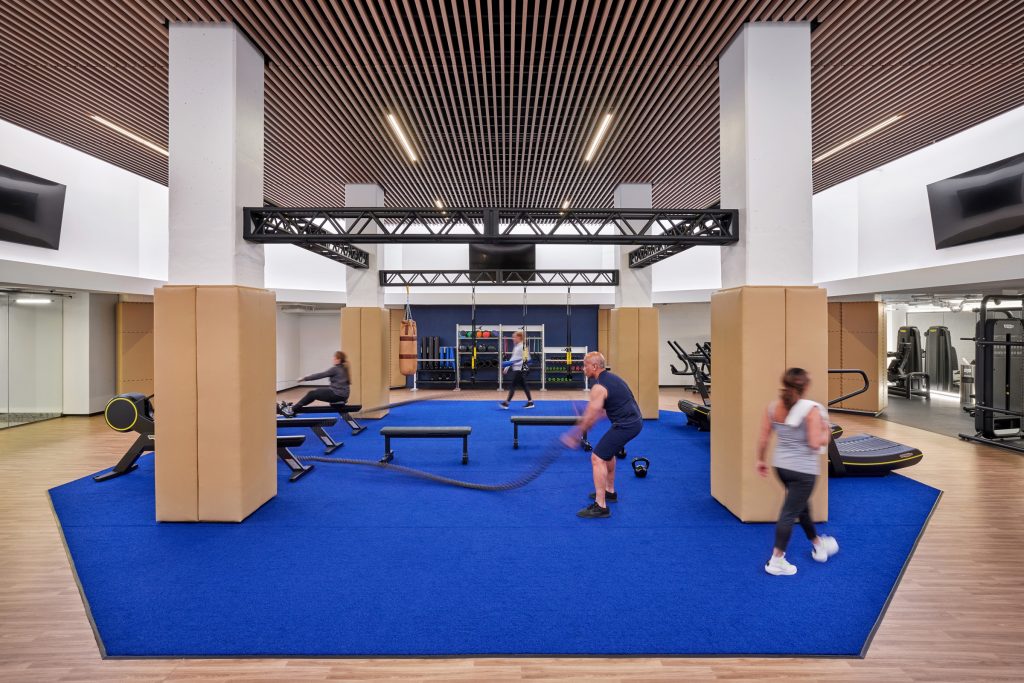
At 1001 Pennsylvania Avenue in Washington, DC, our team converted a portion of the unused parking garage into a double-height fitness center. They navigated existing structural columns and cut through the slab above to create an open studio environment inspired by station-based layouts like Orangetheory. Digital screens, dedicated workout stations, and space for high-intensity interval training (HIIT) support a flexible, professionally managed program with trainers and towel service. Four custom trusses enable suspension training, while hospitality-driven details, including color-changing LED lighting, a wood ceiling and wall panels, faux leather-padded columns, and custom graphic elements that tie in with the building’s lobby, elevate the space.
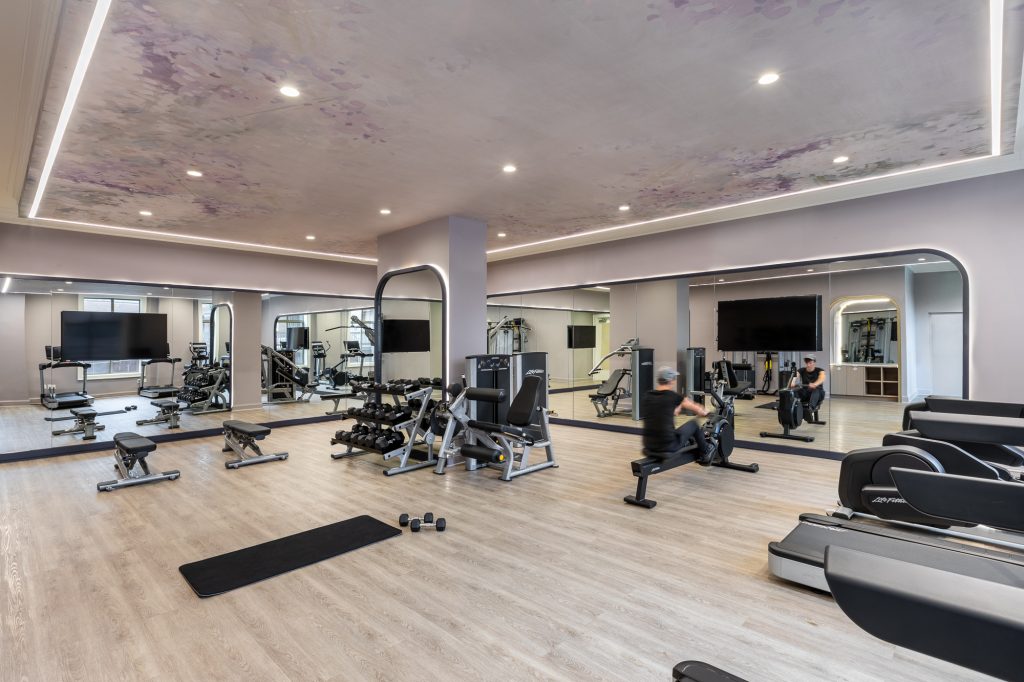
Across residential communities like The Reserve at Clarendon Centre in Arlington, VA, open, airy layouts allow residents to scale their workouts, train independently or with a friend, and customize their routines. What was once an underutilized, dated theater room now offers a standalone environment for yoga, dance, and personal training sessions with lofty 10-foot ceilings. Users have options and flexibility.
Design for Every Body
Designing fitness spaces today also means designing for every body. Universal design ensures users of diverse ages and abilities, including wheelchair users, can navigate and train comfortably. Larger, open layouts provide more opportunity for inclusion.
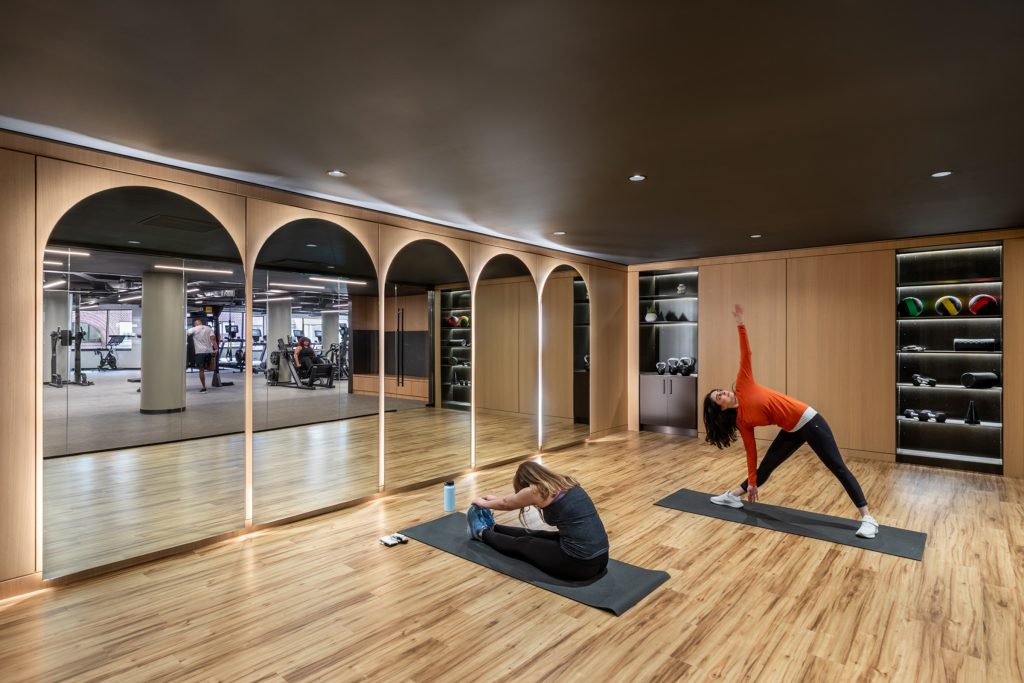
In Washington, DC, the fitness amenities at 1025 Thomas Jefferson cater to different fitness needs. The fitness center and locker rooms received contemporary upgrades, and a new yoga room was introduced, featuring tall, arched backlit mirrors. Not everyone lifts weights, and there is space to train with just body weight using the freestanding rig. A punching bag is attached, along with workout battle ropes and TRX suspension training systems.


Sensory experience matters, too. How does the space feel? Are there harsh overhead lights, or layered lighting with control? Can a yoga room adjust heat and light levels to flex between uses? Acoustics and lighting can greatly influence whether a space feels energizing or overwhelming.
“As a college athlete, I had a team to motivate me. Now, I stay motivated by engaging in well-designed fitness spaces.”
— Maureen McLaine, NCIDQ, WELL AP
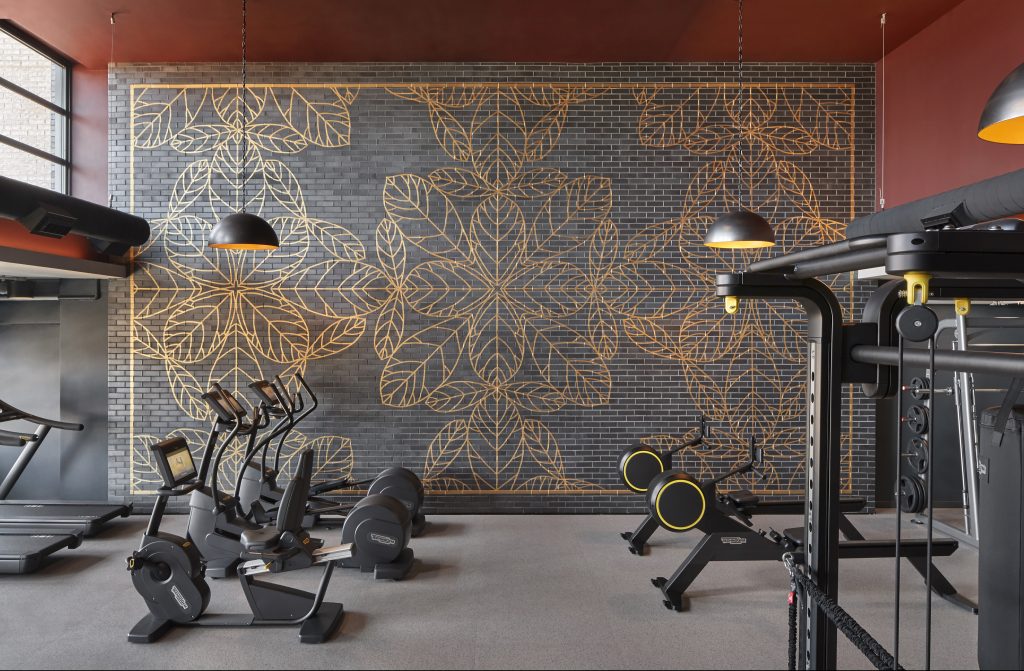
The Batley‘s spacious 2,750-SF, naturally lit, HIIT-inspired fitness studio features top-of-the-line European-imported cardio and conditioning equipment by Technogym, a yoga room, Peloton bikes, and chilled eucalyptus towels with the residence’s monogram. Located in the Union Market District of Washington, DC, a custom gold botanical mural by artist Vero Rivera spans the full height of the soaring ceiling. Taller individuals can fully utilize the freestanding multi-rig without worrying about ceiling height restrictions. The multi-rig can accommodate eight users at once with different functional training stations for group exercise.
Strength + Recovery Are Foundational
As former college athletes, Rhea, a field hockey player, and Maureen, a swimmer, emphasized that strength and recovery mean everything. “You can’t move your body fast and hard if there isn’t time to rest,” said Rhea. “In college athletics, recovery was structured and prioritized, which now informs how we design.”
Recovery is no longer stretching on the floor. It is a dedicated room or zone. Think Theraguns, red light therapy, massage chairs, infrared saunas, and recovery boots. Locker rooms have also evolved into self-care destinations.

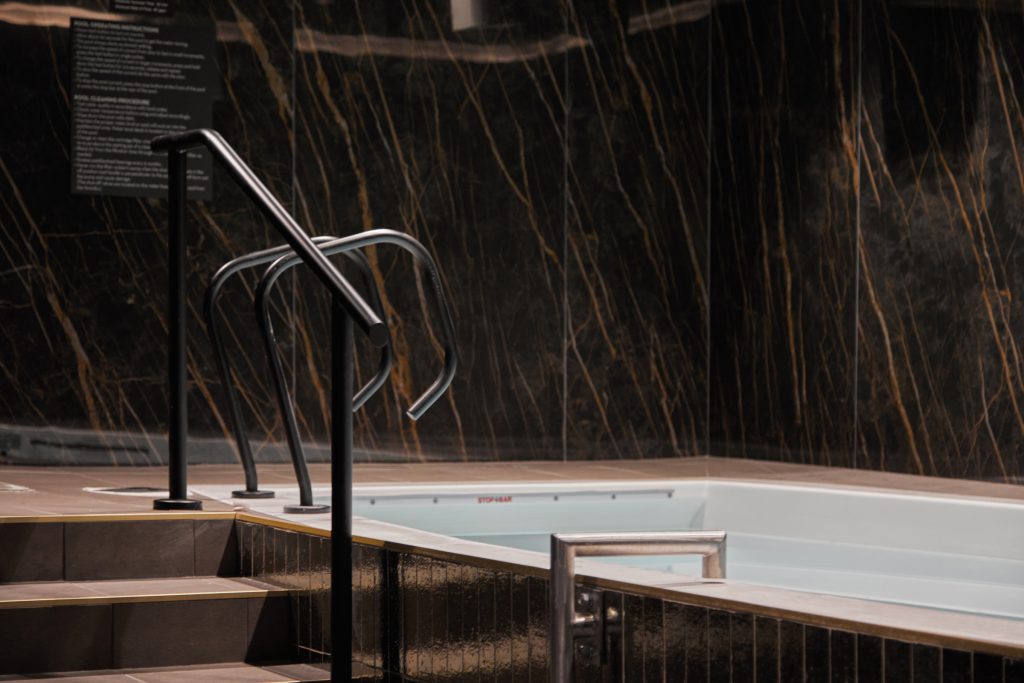
In Arlington, VA, Cortland Rosslyn steps up the luxury factor with a private Aqua Spa, including a plunge pool, an Endless Pool with a powerful, adjustable current for stationary, continuous laps, and zen steam showers.

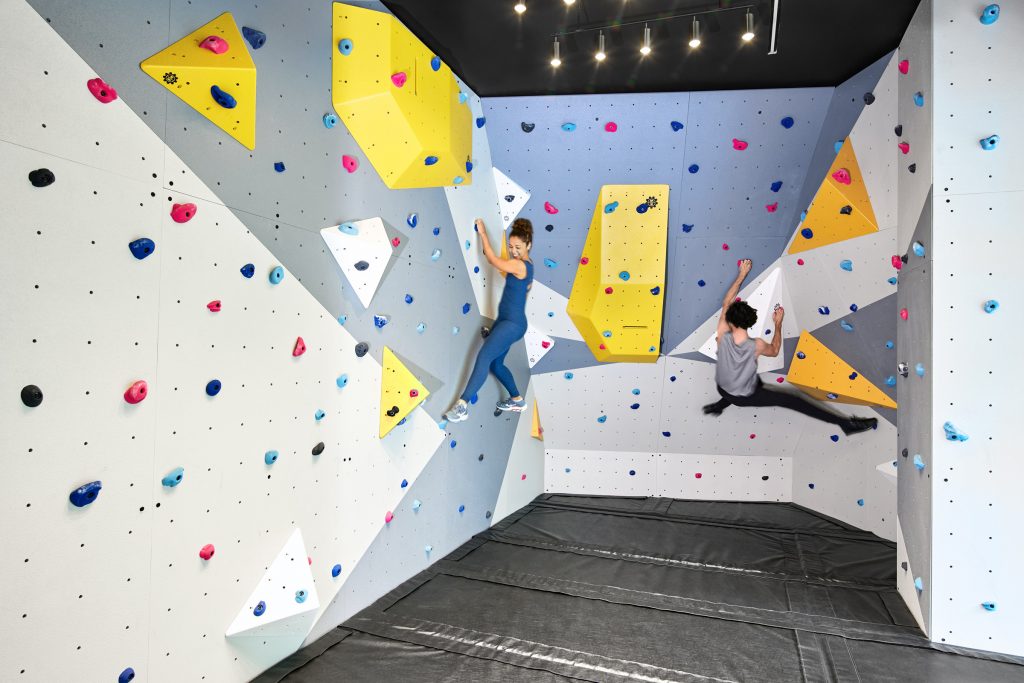
On the second floor, tenants have a 24/7 fitness facility, offering free boutique group fitness classes and even indoor rock climbing walls.
When designed with intention, fitness spaces move beyond a secondary amenity. They become flexible, welcoming environments that support strength and recovery, and spaces that people are motivated to return to again and again.